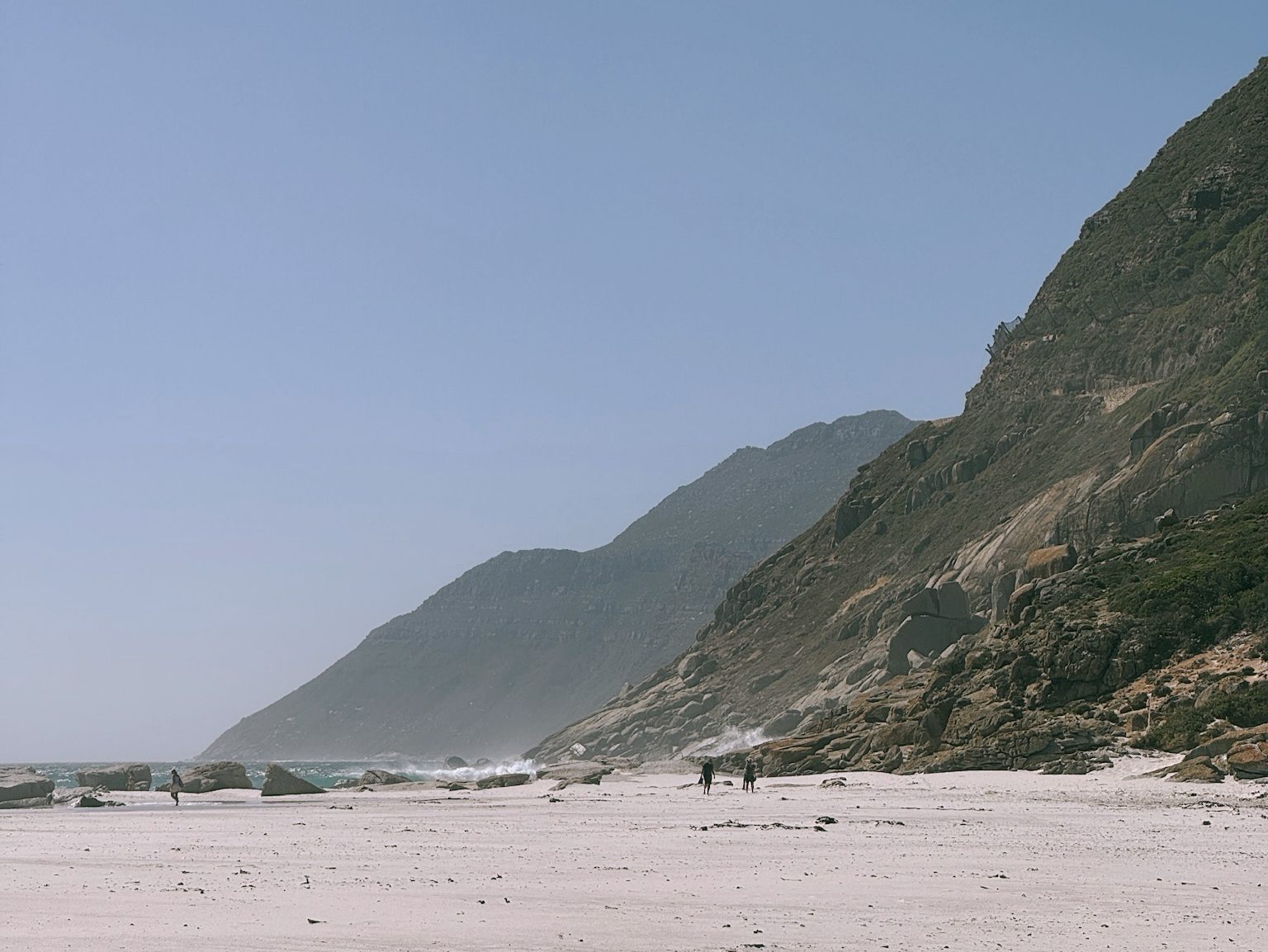

We arrived in mid-February, straight into the high heat of summer. My last visit had been as a teenager, staying with family across various Cape Town suburbs, and I was curious to see my birthplace again with adult eyes.
We began in Kalk Bay, staying in a guest house perched high above the harbour. From our room, we could see fishing boats chugging out at dawn and the tide shifting slowly across the rocks below. During the day, we meandered along the high street, drifting between independent shops, antique stores and galleries, lingering longest at Artvark Gallery, a relaxed space filled with work by Southern African artists. Passing the tidal pool each afternoon, we dipped our feet into the Atlantic and promised ourselves we’d return for a proper swim, though the sun-warmed pool back at the guest house always won out.


In the evenings, we walked down to Main Road for dinner. My favourite was SALT, where we mostly claimed the window seats for the people-watching potential, watching the dusky stream of runners moving towards Fish Hoek — my very first home.
Table Mountain hovered over almost every part of the trip, impossible to ignore from the city below. The last time I’d gone up had been via the cable car, and I’d never properly hiked it before, unless being carried up as a baby counts. This time, we met friends at their house in Camps Bay before sunrise and started the walk straight from their street. The path curled steadily upward through sandstone gullies and protea-covered slopes. By the halfway point, the heat had already settled heavily over the city, and I was immensely grateful for the early start. At the top, the view stretched in every direction — sea to one side, city to the other, and the mountain spine of the Twelve Apostles running south into the distance. We sat for a long time afterwards, drinking lukewarm water and listening to the wind moving through the grass.

For the second half of the trip, we moved into the city bowl and stayed at Acorn House, a carefully restored heritage guest house in Oranjezicht. The days in Cape Town started early and seemed to wind down with the sun. Mornings were spent running along the Seapoint promenade alongside swimmers, dog walkers and groups stopping for coffee before work. Hearing our accents often led to conversations about children and relatives who had left for the UK or Europe — the same move that took my own family to London in 1999. I’ve read recently that many South Africans are returning home with the opportunity to work remotely for international companies, and honestly, I can see the appeal.


One afternoon, we wandered through Kirstenbosch Gardens with Table Mountain rising sharply behind us. My grandparents’ ashes are scattered somewhere there, and no trip seems complete without a family debate with my aunt and uncle over the location of “the bench” that roughly marks the spot. So much of my understanding of the city is formed through familial memories — certain roads where my grandparents lived, my cousins’ school, the local library, and a hairdresser who always seemed to be painted a different bright colour.
On other days, our afternoons drifted between vintage stores, coffee shops and galleries around Woodstock, an area that has transformed significantly over the past decade. We spent hours moving between warehouses and converted industrial buildings, lingering longest at Stevenson Gallery before stopping for coffee nearby. On weekends, the neighbourhood seemed to gather around the Neighbourgoods Market — music spilling out across the old industrial buildings while people moved slowly between food stalls, wine bars and independent shops. We often arrived intending to stay for an hour and somehow lost most of the afternoon there instead.

Not far away, the District Six Museum offered a very different perspective on the city. After spending days moving through Cape Town’s beauty so lightly, the museum grounded much of the trip in the realities of forced removals and the lasting impact of apartheid on the city’s geography and communities. Growing up removed from South Africa as a white person in the UK creates a certain distance from those realities, but returning as an adult, it felt important to consider the oppression and displacement beneath many of the places we moved through so casually during the trip.
Food seemed to shape much of our time in Cape Town. Excellent produce and good wine felt available almost everywhere, but without the formality or stuffiness that often accompanies it elsewhere. In Constantia, the vineyards are a prime example of South African hospitality — polished without ever feeling overly formal. Beau Constantia felt livelier, with a younger crowd sitting out on the terrace over charcuterie boards with music drifting in the background. Across the hill at Constantia Glen, the atmosphere was quieter and more grown up; meals gradually dissolved into people sitting out on the grass to watch the sunset while children rolled down the hills nearby.

Cape Town folds outdoor life into everyday routines in a way that feels difficult to recreate elsewhere — mornings beginning in the ocean, relaxed meals stretching into evenings, mountains and coastline constantly pulling people outside. I’m not going to leave my return quite so long next time.